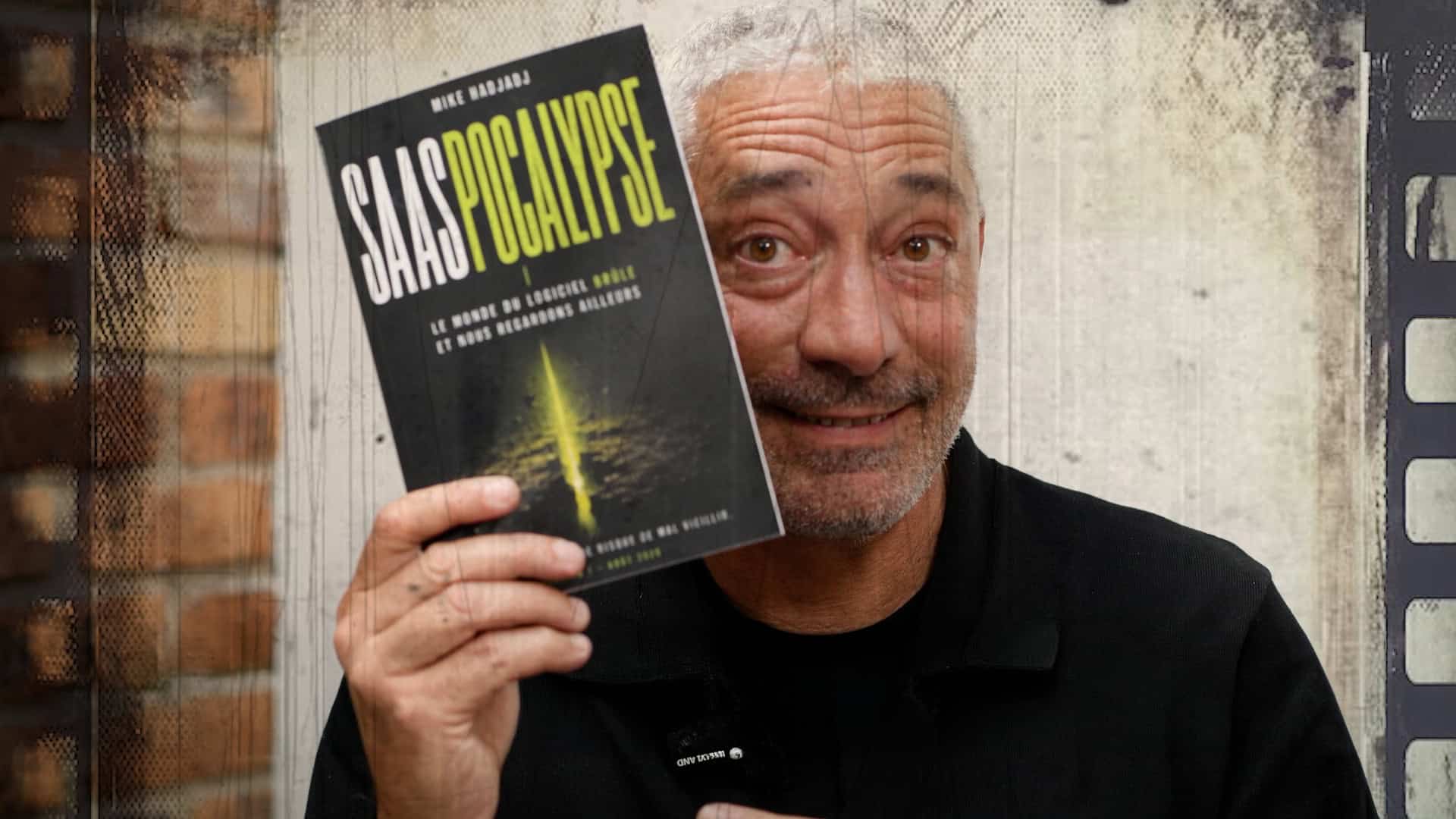

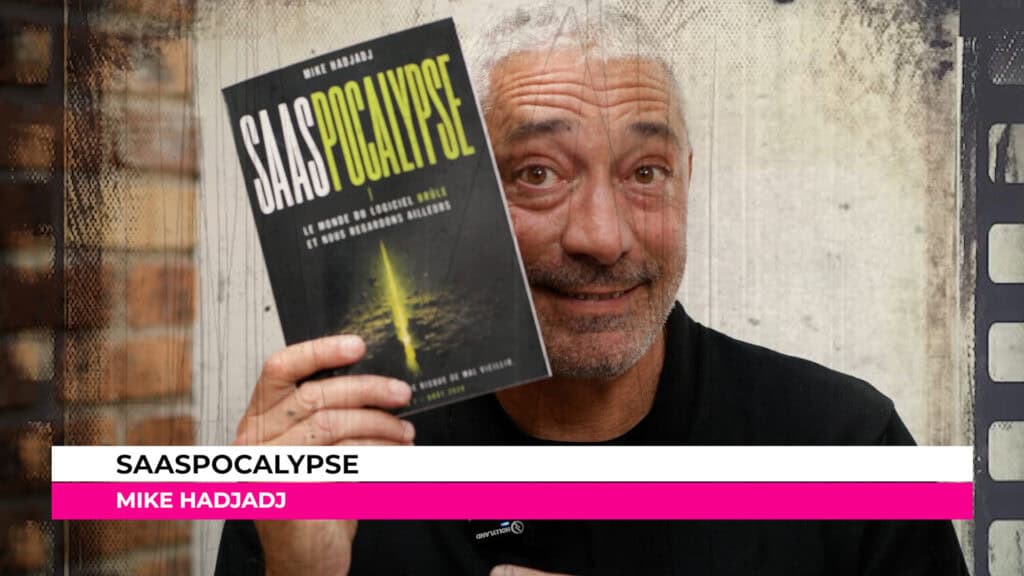
Mike Hadjadj, a retail and SaaS expert, has just published a book (in French) called SaaSpocalypse. Every year, he supports two to three hundred start-ups as a mentor, advisor and investor, mostly in the retail sector. In his own words, he isn’t predicting the end of software vendors, but he does see their value being hit hard by the changes AI is bringing. I interviewed him to understand what this shake-up means for vendors, their customers and the whole SaaS ecosystem.
SaaSpocalypse Now! And The Value Drain
TL;DR
- With SaaSpocalypse, Mike Hadjadj isn’t predicting the end of software vendors. He’s saying the price of software is now negotiable.
- French e-commerce giant La Redoute rebuilt a €360,000-a-year tool in 48 hours using AI.
- Three factors can shield a SaaS vendor, namely urgency, value and stickiness.
- Big vendors are not spared. Some retailers have halved their Salesforce budget, or even cut it to a third.
- Gartner is looking in the rear-view mirror, while Mike is watching the 2027 contract renewals.
- His advice to vendors is simple. Talk to your customers now and ask them why they pay.
SaaSpocalypse Now! or How to Build a SaaS Without Coding
M.H. The book started with a chat at my physio’s. I’d had an accident and needed rehab. He’s a bit of a geek and told me he was setting up a new business line without buying any software or paying for a single SaaS subscription. Using Base44, a tool owned by Wix, he’d rebuilt a small CRM, a training tool and a small accounting and invoicing package himself. That intrigued me.
Podcast (english): Play in new window | Download (Duration: 20:30 — 28.3MB)
Subscribe: Apple Podcasts | Spotify | Android | RSS
I run La Retail Tech, a community that has been going for four and a half years, with lots of content and around 3,000 members. Our community platform was grossly outdated. It had stopped evolving and every small request was sitting in a support ticket for three weeks.
We Dreamed It, and AI Delivered
I don’t sleep much, so I gave it a go and I spent a few hours talking to an LLM, asking it to rework parts of the site and give it a modern look. I ended up with a front end, which I showed my team after the weekend. They recognised the site they’d been dreaming of.
We had almost launched a tender, complete with requirements definition and technical provisos. That meant bickering over compromises with the team, because not everything is possible. With AI, everything is crystal clear. I talk and hey presto! It’s done.
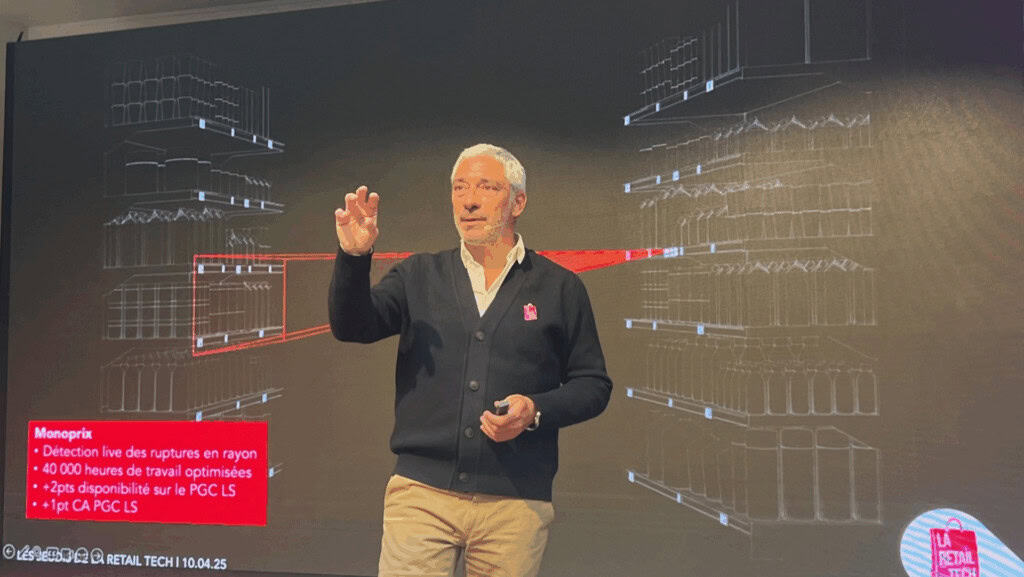
I’ve kept going since the book came out. The front end is done and I’m now tackling the back end. The agent kept misunderstanding me, so I found another agent that handled my agent, which I talk to on WhatsApp. It knows my whole environment, runs the tests and writes very detailed prompts that I just copy and paste. I can’t code, and neither can my physio. So the question isn’t whether people can do it. It’s about who will still pay, for what, and where the value sits. That’s one of the book’s main stances.
A French E-commerce Giant Rebuilt a €360,000-a-Year Tool in 48 Hours
M.H. The other trigger was meeting French e-commerce giant La Redoute at an event. They used a visual product discovery tool, created by an Israeli start-up. The tool worked very well. Other French retailers used it too, such as Monoprix and Castorama, but you could tell it was nearing the end of its life. They were all looking for a replacement and asking me if I knew of one, before launching a tender.
La Redoute put two people on it for 48 hours, with AI. They studied how the tool worked, rebuilt it, tested it and released it. The copy is better than the original, because they could tune it to their own environment, something that a software vendor seldom allows. La Redoute was spending €360,000 a year on the tool, now they don’t.
SaaSpocalypse Companies of All Sizes Are Following Suit
Digging deeper, I found out that companies of all sizes, including large ones with the right skills, are already going after commoditised tools that aren’t core to the business. If the tool falls over, it’s no big deal. The savings are huge. When I talk about value destruction, it’s because the rebuild cost nothing like the old price. Two days, two people, a bit of maintenance, updates, testing and tokens. There’s simply no comparison. A small part of the value shifts to in-house skills, and some is bought externally, at a very different price. Most of it is destroyed.
There’s also a whole industry around SaaS spending. Agencies, consultancies, integrators and, above all, start-ups, which means funds and fundraising. If the pie shrinks, all of that ecosystem will be hit.
Urgency, Value or Stickiness, What Protects a Software Vendor?
M.H. I’ve been supporting start-ups for a very long time, as a mentor, an advisor, in incubators and accelerators, and as an investor too. Until now, I judged them on unwritten criteria, to decide whether I believed in them, wanted to back them or even invest. How innovative they were, how good the team was. That has changed, and I’ve come up with a new three-part test.
The first criterion is urgency. The need has to be pressing, driven for instance by regulation or competitionMarket definition in B2B and B2C - The very notion of "market" is at the heart of any marketing approach. A market can be defined.... The second is value, which must be blatant, immediate and measurable. The third is new to me, and it’s stickiness. This is what will refrain end customers or competitors from copying your product in a few minutes.
SaaSpocalypse, an Innovator “Disrupted” by Its Own Customers
In the book, I cite Smartway, a pioneer in the fight against food waste. Its software tracked the best-before dates of perishable products in stores, to decide when to pull an item from the shelf and what discount would guarantee a sale. A salad or a yoghurt might go at 22% off one day and 40% off the next.
It first sold well to independent supermarkets and hypermarkets, whose owners are managing their own money. Then the central buying groups perceived the value of that piece of software. The IT divisions of the big French retailers, such as Leclerc, Intermarché or Carrefour, built more or less the same thing, which didn’t work as well but cost far less. It took them two to three years to get there.
The Better a Product Is, the More Likely It Is to Be Copied
The difference is that today, the better your product is and the more widespread, the easier it is to copy. The bulk of the work is no longer the code. It’s modelling what you can help the customer earn, the processes, the interfaces. Smartway was smart, because it moved into other areas, such as fresh produce and ordering, with higher barriers to entry. Commoditised SaaS companies, on the other hand, are finished. The better they are, the faster they get copied. A young company with no stickiness will sell pilots, their customers will love the result and decide to rebuild the software. You can’t blame them.
“The better your product is and the more widespread, the easier it is to copy”
Mike Hadjadj
For English retailer Save Your Wardrobe, stickiness is part of the equation. Its platform handles repairs for big leather goods and clothing houses, a field that’s still archaic. Anyone can digitise appointment bookings but Save Your Wardrobe also built and runs a network of approved repairers. They didn’t mean to do that at the outset. But now, it’s become a significant barrier to entry. Other barriers exist, such as standards and certifications, notably in payment systems and hardware. There is also external data customers need to buy to operate properly. Every vendor should ask itself why its customers wouldn’t have a good reason to copy its products.
Are Big Vendors as Vulnerable as Small Ones?
M.H. I was invited to talk about my book a few weeks ago at an event a vendor was hosting for its partners, on the eve of a trade show. I said not everyone would be hit in the same way. Small SaaS vendors would be hit straight away, while the big ones such as Salesforce would be hit later, and on core issues. The next morning, at the show, a friend told me a big brand had just cut its Salesforce budget to a third. That afternoon, the boss of another retailer told me he had renegotiated his contract and halved it.
Mandatory Modules They Never Needed
Their reasoning is simple. They were paying for mandatory modules they never used. Others were useful, but never quite satisfying. What interests them is the engine. They tell Salesforce, Oracle or SAP that they’ll only buy the engine, that they’ll rebuild the rest themselves by vibe coding, and that they therefore want the price divided by two, three or four. These big vendors aren’t stupid. They’ve understood that the value has shifted.
I’ve worked for software vendors before, including one that pioneered CRM before Salesforce. All our value rested on two things. What we brought the customer, meaning process modelling, and how we delivered it, meaning the code, its robustness and its ease of use. To extend the product range, we were better off buying small companies than developing in-house, which would have taken years and cost a fortune. Between 1999 and 2006, we took over twelve small vendors, covering marketing, emailing and other functions.
SaaSpocalypse and Why the Value Is No Longer in the Code
Today, it’s the complete opposite. I show an agent an existing feature, ask for the same thing but improved, tailored to my needs, and it’s done almost before I’ve pressed the transmit button. The value is no longer in the code. It’s in the ability to express, visualise, project and model what you want. Anyone can write prompts, but they’re often mediocre, and many people give up because it’s too complicated. But the people who used to write the specs of the software know how to do it, and this will save a huge amount of time and budget.
“The value is no longer in the code. It’s in the ability to express, visualise, project and model what you want”
Mike Hadjadj
Will Adobe Creative Suite Fall Victim to the SaaSpocalypse?
Photoshop Cloned With AI. Is It SaaSpocalypse for Adobe?
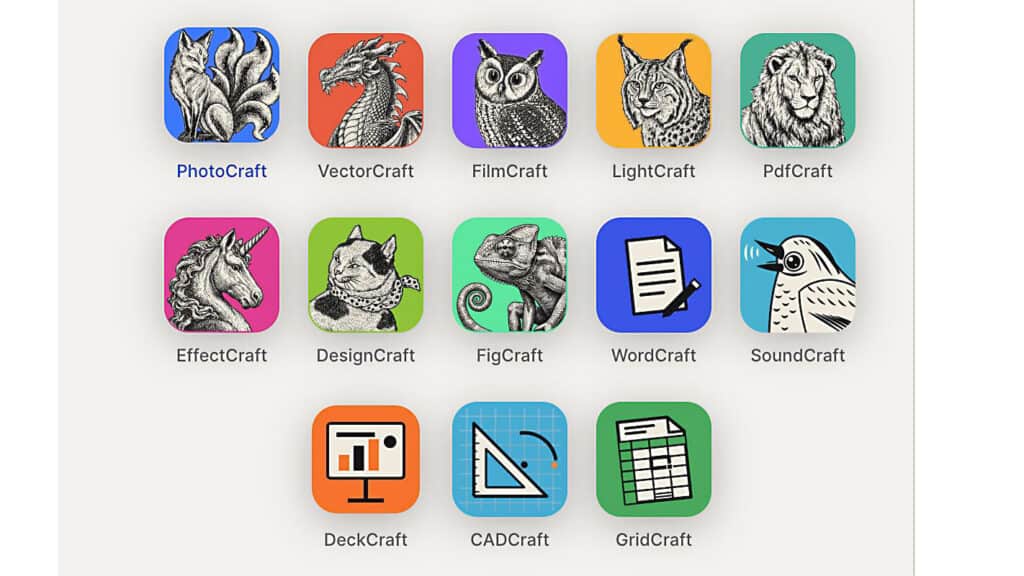
In early October, developer Brandon Thomas released ArtCraft, a set of free, open-source clones of seven Adobe programs, including Photoshop, Illustrator, Premiere Pro and Lightroom. He wrote them in Rust with Claude Opus 5.5, running several agents in parallel. The first repositories date from late September.
What Backs Up the SaaSpocalypse Thesis
- The look and the everyday features can be copied very quickly. According to Digital Camera World, testers say anyone coming from Photoshop gets up to speed almost instantly.
- PhotoCraft, the Photoshop clone, opens most native .psd files, according to Developpez.
- The project passed 40,000 stars on GitHub within a few days, which shows the appetite for a free alternative.
- The trigger is the one Mike describes. A customer fed up with a vendor’s prices and terms, in this case Adobe’s cancellation fees, would rather rebuild the product themselves.
What Undermines the SaaSpocalypse Thesis
- The project is in alpha, unstable and incomplete. Brandon Thomas promised feature parity within a month, and now talks about several months.
- The analysis by BiGGo Finance says PhotoCraft covers around 76% of features, but only 45% of what professional use demands. Of 256 files created with Photoshop, 133 display pixel-for-pixel identically, and filters match in only 5 cases out of 30.
- Mature software is valued above all for its edge cases, handled over decades, which appear on no feature list. An Adobe engineering director reportedly said this year that rewriting Photoshop would be almost impossible and pointless, according to the same source.
- The legal position is far from settled. Jonathan Bailey of Plagiarism Today, who stresses that he isn’t a lawyer, points out that copyright protects code, not functions. He sees the main risk in Adobe’s terms of use, which forbid studying the software in order to recreate it. Trademarks and patents remain open questions, and none of the articles I read reports an official reaction from Adobe.
- Sources differ on some figures, such as the number of commits, the number of stars or the exact list of apps. I’ve only kept what is corroborated.
My Take on the Adobe SaaSpocalypse
This case doesn’t prove Photoshop is doomed. It shows that copying the look has become almost free, and that a vendor’s defence lies elsewhere, in reliability, file compatibility, edge cases, support and the law. That’s the stickiness Mike is talking about.
Sources
AppleInsider, Vice, Digital Camera World, BiGGo Finance, Plagiarism Today, Developpez.
If Value Leaves Software, Where Does It Go?
M.H. It moves, but I’m convinced part of it is destroyed, because a whole ecosystem lives off software. A big slice of the pie is going to vanish. Another slice shifts to infrastructure, networks and people, meaning the ability to model, manage the project, support and maintain. It could mark the return of the freelancer.
People always talk about make or buy, building in-house or purchasing. I think a middle way is going to appear, which I’d call “buying make”. A large company shall give freelancers or consultants a very simple brief to copy this application or rebuild it in two or three days. It costs far less. There’s no tender and not even a specification, since you’re asking for something that already runs.
This morning I read about a new tool designed to copy existing applications. In the prompt, you no longer even say what to build, just to do what that tool does. You describe the environment and what it needs to integrate with, then you improve it, simply by talking. So there’ll be value in people, in agility, a bit in tokens, and perhaps in teams, internal or external, that check, integrate, validate and secure. But it won’t be the same value.
Retailers Don’t Build Software, So Aren’t You Living in a Bubble?
M.H. This is laughable. A retailer’s job wasn’t to build e-commerce sites either, and they all did.
I’ve taken retailers to China several times, and they were shocked. Over there, a big retailer has no IT team. In France, the checkout system is the most sensitive thing there is, and everyone has their own. In China, at a self-checkout, you see machines in three colours, depending on whether you pay with Alipay, WeChat Pay or something else, each running on a different information system. That would be unthinkable in France. What’s more, these systems are run by outsiders, Alibaba or Tencent, which means sales data is shared. The retail boss I took there couldn’t believe it.
A Cultural Divide
But it’s a cultural thing. They all share the same website and the same architecture. When a new feature comes out, everyone gets it. The same goes for marketing, built around two or three big platforms such as JD.com, Tencent and Alibaba. Their job, they say, isn’t to be IT people. It’s to buy the right products, price them right and keep the promise, for example a thirty-minute delivery to the other side of Beijing.
In France, we did the opposite. For years, we built up oversized IT, development and innovation teams. They have to be kept busy, so we redevelop things, then we maintain them, and the teams keep growing. Saying retailers aren’t developers is wrong. They already do a lot of make or buy. They built big systems and bought innovation from outside, because it often comes from start-ups. Today, they risk rebuilding innovation before they’ve even bought it. They’ll face the same shift, because their teams include a lot of developers they will no longer need. You no longer create code by developing it, but by prompting it and setting objectives.
AI Cuts the Cost of Building, Not of Maintaining, and Your Portal Isn’t Live Yet, So Isn’t That What You Are Still Testing?
M.H. My answer is that it depends. First, the build is generally far heavier than the annual maintenance. When that cost goes, you’ve already gained a lot. Then you need to look at what maintenance actually involves. There’s hosting, but when it’s in-house, you do what you want. There are new versions, imposed for security reasons or to meet the needs of other customers. Here, you only deploy what you need, for example when a tool in the environment has changed. If I need a new feature, I build it, test it and release it, on demand. Sometimes I just swap an API, and that’s it.
The amounts are hard to pin down, because we’ll mostly use internal teams, so we’re talking internal cost, not selling price. Even if it took the same time, I’m convinced the cost will dwindle. For my portal, which we’re rebuilding, I paused to write the book, and then I tackled the back end. I’m not aware of the maintenance costs at this stage. There is a learning curve.
Then there’s the cost of tokens, which people say will multiply. Today, we obviously pay far less for tokens than they’re really worth. But the big LLM players are in such fierce competition that they can’t let prices soar. There’s open source, DeepSeek, the approach taken by Mistral, and others will follow. Costs won’t fly to the moon. What may happen is that some of the players of the AI scene may go under. They raised billions, they have outsized valuations, and not all of them will survive.
Gartner Forecasts 15% More Software Spending for 2026, Yet a Trillion in Market Value Has Vanished, So Where Is the Value Destruction?
M.H. Gartner only sees the multi-year contracts already under way, and possibly those being signed. It can’t see what the renewals will look like. Yet we’re living through an extremely violent change, not to say a revolution. We’ve seen others, but never on this timescale. Spending is in the rear-view mirror, while the markets look ahead.
The figure I’m watching is the 2027 renewals. By then, end customers will have run tests. Some will simply renew, others will renew but negotiate hard. They’ll ask their vendor to divide maintenance or the SaaS price by two, three or four, and vendors with their backs to the wall will say yes. I don’t think Gartner has anticipated this, because the customers themselves haven’t done it yet.
SaaSpocalypse and the Wake-Up Call
When I talk again to people I saw three or four months ago, they’ve already changed their minds, because they’ve tested. When I spent a night on Base44 rebuilding the La Retail Tech portal, I didn’t know I was going to replace everything, or how long it would take. It’s the same for them. They’ll build one piece, then another, and gain confidence. They’ll make mistakes too, inevitably. But they aren’t stupid. They’ll start with low-risk topics to get a feel for it.
Gartner can’t survey that. Usually, you ask decision-makers about their spending over one, two or three years, and they have budgets and strategic plans. Here we’re in a different world, because these are end customers who are making money. The IT and AI teams will bring in money by cancelling SaaS contracts and replacing them. That cash, obvious, immediate and permanent, will largely flow back up to group level, and show up in prices, competitive position or investment. Another part will be used to build other tools and chase even more savings. As far as I know, that’s completely new. I’ve never seen a support function, a cost centre, suddenly end up with positive budget lines.
Isn’t Telling Vendors to Call Their Customers Putting Ideas in Their Heads?
M.H. This book is a first version. There’ll be a second, maybe a third. It’s there to start a discussion, which gets richer every day with the people I meet. I tell the SaaS vendors most at risk to go and see their customers right now and start debating. That isn’t a risk. It builds trust faster and puts the debate back where it belongs, because a vendor needs to know why its customers pay. The paradigm has shifted so much that a far more collaborative approach is needed. The customer can copy and intellectual property no longer counts, fine. But the vendor still has assets, outside expertise and contact with a good part of the market.
An Innovation Boss Is Bringing Tools Back In-House
The innovation boss of a big retailer told me last week that they’re going to bring a lot of tools back in-house, but that if they take in too many, innovation will dry up. It comes from outside, from small start-ups, from young people with brilliant ideas whom I meet in incubators. If nobody buys from outside any more, it disappears. The second point is the outside view the vendor brings, the pooling of experience and the external data. You have to sit down with your customers and work out how to keep bringing them value tomorrow, when it will no longer come from the code.
I’m not predicting the death of software vendors. I’m saying the price of software is negotiable and nobody has told the shareholders. We’re going to go through a fairly brutal reality check, and something else will come out of it. As usual, the best will pull through, and the best are those who saw it coming.
A Technological Lead Won’t Save You From the SaaSpocalypse
When a start-up boss tells me his technological lead protects him, I get very worried. When he tells me he’s been talking to his customers and partners for six months, that he’s reworked his offer and is testing it, I like that. You need constant reinvention and agility. If these founders have them, it’s because they were very good to begin with, and there’s no reason for that to change. You have to look up, not waste time and tackle this together. That’s why we’ll be running working groups between start-ups, big vendors and big retailers, to create value for everyone, a new landscape and new ways of working together, without too much damage.
“I’m not predicting the death of software vendors. I’m saying the price of software is negotiable and nobody has told the shareholders”
Mike Hadjadj
Mike Hadjadj is thus waiting to observe who has engaged in dialogue with their customers. Until that point, the SaaSpocalypse remains on the agenda.
The Guest
Mike Hadjadj, thirty years in B2B technology (Coheris, Wincor Nixdorf, Generix, Aurea), founder of iloveretail.fr and co-founder of La Retail Tech (around 220 companies, more than 3,000 members), author of “SaaSpocalypse” (in French, version 1, August 2026) and speaker at some fifty events a year.